Read alouds are one of my favourite activities to do with my class. They allow us to build background knowledge; have a shared experience; talk about literary devices, plot, and characterization; and expose kids to books they may not have been able to read on their own. Over the years, I’ve had several read aloud books that my students and I swear are “the best”. In 2020, I published a post with my favourite read alouds at that time. Since then, I’ve tired of a few of those titles. They’re not bad, I just don’t want to read the same books every year! Here is an updated list with some of my favourites from the last few years.
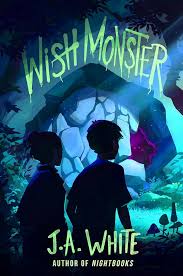
The Wish Monster, by J.A. White
This book is suspenseful, creepy, and full of unexpected twists and turns! My students begged to keep reading, talked about it outside of school, and bought or borrowed copies to read ahead. I think we finished the last three chapters in one sitting because they were so engrossed. Wishmonster also gave way to an inside joke. For the rest of the year, anytime someone said the word “wish”, the class would start murmuring “wisshhh…” I won’t tell you why… read it yourself!
I will admit that, for years, I avoided reading “scary” books in class. However, when I read J.A. White’s Nightbooks and Gravebooks last year, I saw how they can really engage the class and reframe read alouds for kids who don’t generally like them. Of course, be mindful of your class and what would be appropriate for them. In my opinion, this book is a great fit for grade 5. Kirkus agrees, suggesting it for ages 8-13.
One Sentence Summary: Kids discover a magical, wish-granting monster but soon realise that having all your wishes come true can lead to unexpected, and unpleasant results…
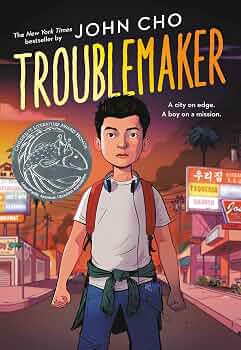
Troublemaker, by John Cho with Sarah Suk
This book features a Korean American protagonist, something which immediately catches the attention of most of my Korean students. In fact, I’ve had several kids tell me they’ve never had a novel read aloud with an Asian character in it, so this one gets points for representation alone. But, even if we put that aside, it is an absolutely solid book. Cho and Suk have done a great job of creating compelling characters and a story that is jam-packed with action without being unrealistic. The first time I read this aloud, my class kept saying, “I can’t believe this all happened in one night!” The story takes place during the 1992 Koreatown riots in California. There are great opportunities for discussions about racial stereotypes, racial violence, and gun usage. This book is also a ‘gentle’ introduction fo historical fiction, a genre I’ve found a lot of my students are hesitant to read even if they really enjoy learning about history. Prepare to feel old as you stop to explain 90s tech!
Kirkus recommends this one for ages 9-13.
One Sentence Summary: A young Korean American boy who feels like he has been labelled a “troublemaker” tries to redeem himself by bringing his shopkeeper dad a gun in the middle of a race riot.
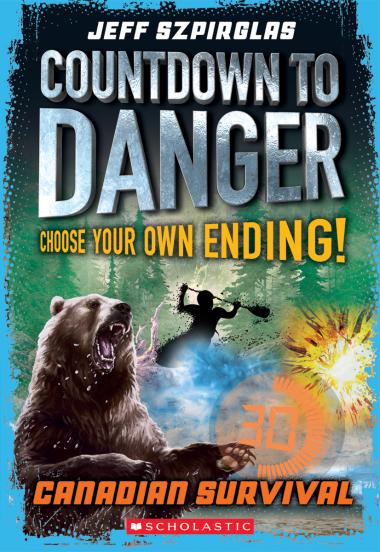
The Countdown to Danger: Choose your own ending! series by Jeff Szpirglas
I’m going to be honest… this one isn’t on the list for its literary merits or its potential for deep discussions. It’s on the list because my students were absolutely obsessed with it! That, in my opinion, is a mark of a great kids’ book. We only read the Canadian Survival one, but they LOVED trying out the endings and finding all the crazy ways we (they characters are written in second person) died. The storylines take some wild and wacky turns, so be prepared to suspend disbelief. But also be prepared to have the books fly off the shelves! If you chose this as a read aloud, I’d suggest tracking which storylines you’ve tried and what happened. Next time I read this aloud, I’ll make an anchor chart that says something like, “page 27 – fell off cliff”. Finding a way to keep track would definitely save some time. My students wanted to read all the possible storylines. We didn’t, but many of them borrowed the book and read through it again on their own.
This series would also be a great choice for First Chapter Friday or any other book talk. You could literally read a whole storyline in less than ten minutes, and I bet lots of kids would want to read the rest!
One Sentence Summary: You’re on a disastrous canoe trip and need to find a way to get help.
Ban This Book, by Alan Gratz
This is a great book with a real-world issue that kids can easily relate to. There are lots of opportunities for discussions about censorship, freedom to read, and what is and is not deemed “appropriate”. Although the fight against book banning is the main focus, a lot of kids also noted that they connected with the protagonist. She feels like her parents always expect her to give way to her younger siblings and finds solace in books amidst chaos at home.
One Sentence Summary: When her favourite book is banned from the school library, Amy-Anne finds a creative way to push back against book banning and, eventually, finds her voice.
Honourable mentions...
This year, I decided to do the first book in Lemony Snicket’s A Series of Unfortunate Events as a read aloud. The engagement was off. the. charts. My students were so invested in the story that they wrote fanfiction and poetry inspired by it. They watched the show and movie together on playdates, and borrowed and bought the series to keep reading. I could hear them discussing the book as they waited outside each morning! They convinced me to read the next book, and the next, and the next… With only two weeks of school left, we had finished the first five books. They convinced me to hold a vote on whether to read book six, and the vote was almost unanimously in favour. You read that right, we read six novels in a series, back-to-back… and the kids complained that we couldn’t finish the series! The biggest pro to doing the series (or, roughly half the series) as a read aloud was obviously the engagement. Another was that there were actually a surprising number of opportunities to discuss literary devices; Snicket does a good job of explicitly explaining them and revisiting them over and over. The biggest con was that all the characters are pretty one-dimensional. One of the villains’ key trait is that they look like neither a man nor a woman. I don’t love that, without any other real traits aside from that and being evil, kids might jump to conclusions about looking like neither a man nor a woman being a bad thing. However, I did feel like we had other discussions about gender expression throughout the year and again as we read this book, so I felt like it wasn’t an issue to write the book off over.
Last year, my students really loved Dusti Bowling’s Across the Desert. I really enjoyed it the first time I read it, but felt it dragged a bit in the middle when I read it aloud. My students vehemently disagreed. The story follows a girl whose mother is struggling with substance abuse. The protagonist has to go on a solo journey across the desert to help save a girl who crasher her ultralight flyer. This adventure aspect was engaging, and I also liked the opportunities to discuss substance abuse. It may seem like too big a topic for a fifth-grade class, but many kids know someone who has been impacted by it. And, even if they don’t, they have almost certainly heard stories. This provided an opportunity for some myth-busting and to build understanding and compassion.
I read a LOT of kidlit this year, and these are some novels I might do as read alouds in the future: Wesley King’s Benny on the Case (a Canadian mystery featuring a protagonist with mosaic Down Syndrome), Nicki Pau Preto’s The Last Home School for Magical Delinquents (a fun fantasy where the protagonist serves as an allegory for students who may feel like ‘troublemakers’ or failures), and Lucille Abendanon’s The Songbird and the Rambutan Tree (a WWII novel with lots of based on the author’s grandparent’s experience in modern-day Indonesia. There are TONS of opportunities for discussions about colonialism and race).
And, of course, I’ll probably return to other books I’ve read aloud many times before like Wesley King’s OCDaniel, Kelly Yang’s Front Desk, and Ellie Terry’s Forget Me Not.
Happy reading!